The complete guide to styling cushions
The Art of the Cushion
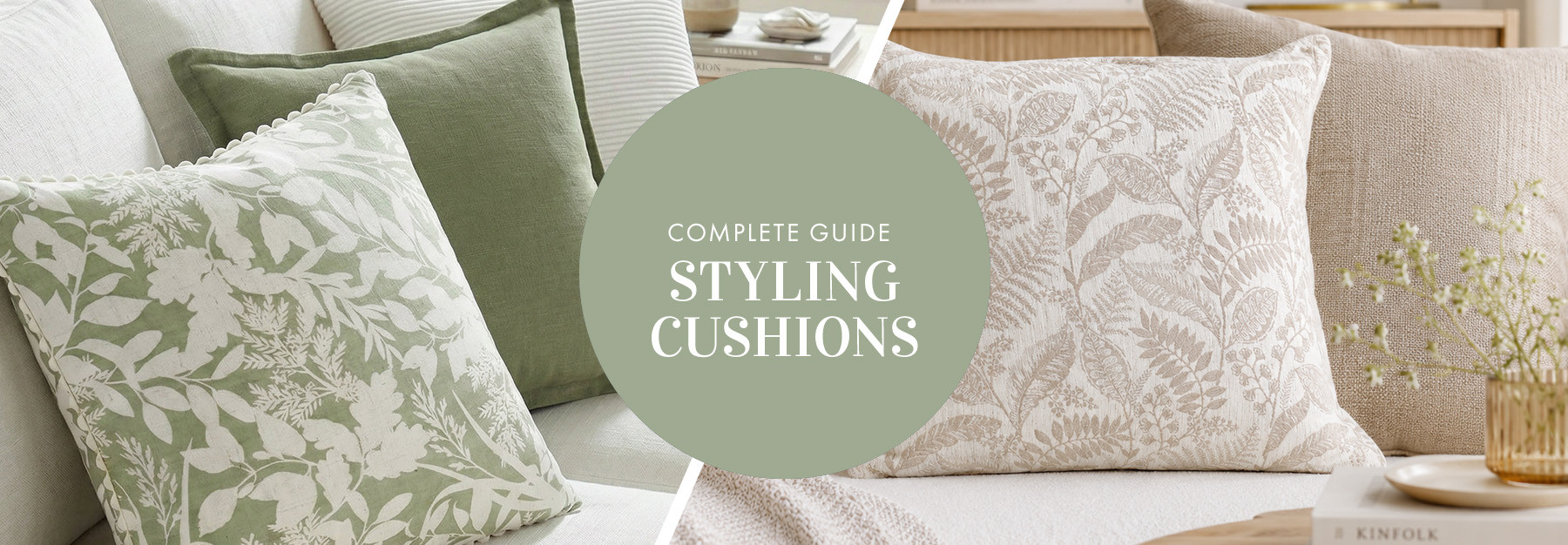
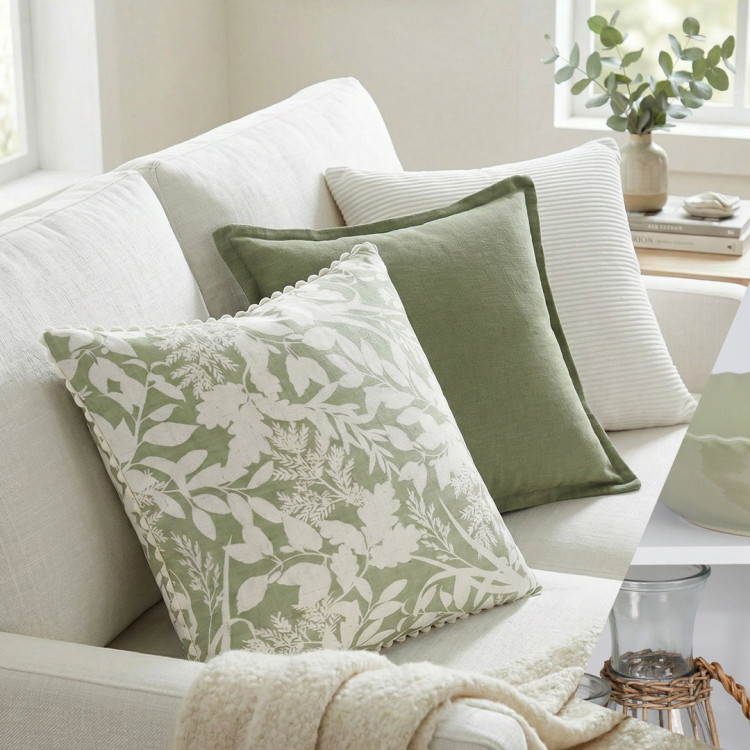
Cushions are one of the simplest ways to change the feeling of a room. They bring softness, colour and pattern, but more importantly, they can make a space feel comfortable, layered and lived in. The most beautiful combinations rarely rely on everything matching perfectly. Instead, they bring together different scales, textures and tones that have something in common. A colour might appear quietly in two different patterns, or a simple cushion might give the eye somewhere to rest. In the room pictured above, you can see how a soft palette of sage green and warm white connects each cushion, while differences in pattern, texture and scale keep the arrangement interesting. The botanical print becomes the feature, the plain green cushion adds depth, and the subtle stripe brings another layer without competing for attention. The secret is knowing what to mix, what to repeat and when the arrangement has enough.
Begin With a Palette
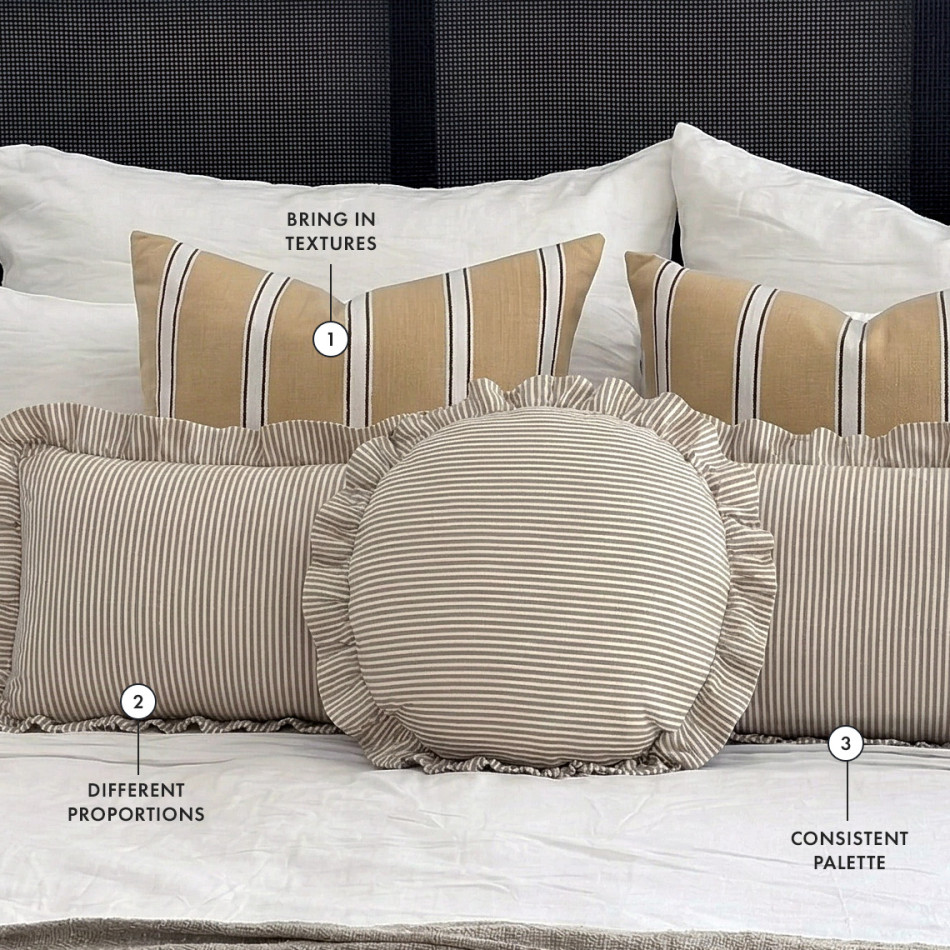
Before thinking about patterns or how many cushions you need, start with colour. Look at the room as a whole and choose two or three tones that already belong there. These might come from an artwork, rug, curtains, upholstery or the natural materials throughout the space. You do not need to match these colours exactly. A combination often feels more natural when there are slight variations within the same family. Soft olive can sit beautifully beside sage, oatmeal with warm white, or faded blue with deeper navy. Keeping the palette considered gives you much more freedom to play with pattern and texture.
Mix Pattern With Purpose
A good cushion combination usually includes patterns of different scales rather than several prints competing at the same level. If you begin with a larger botanical, floral or geometric design, pair it with something quieter. A fine stripe, small check or subtle woven pattern can create contrast without making the arrangement feel busy. Think of one cushion as the starting point rather than asking every cushion to make a statement.
Pull colours from that hero pattern into the surrounding pieces and the arrangement will begin to feel connected and considered.
Bring in Texture
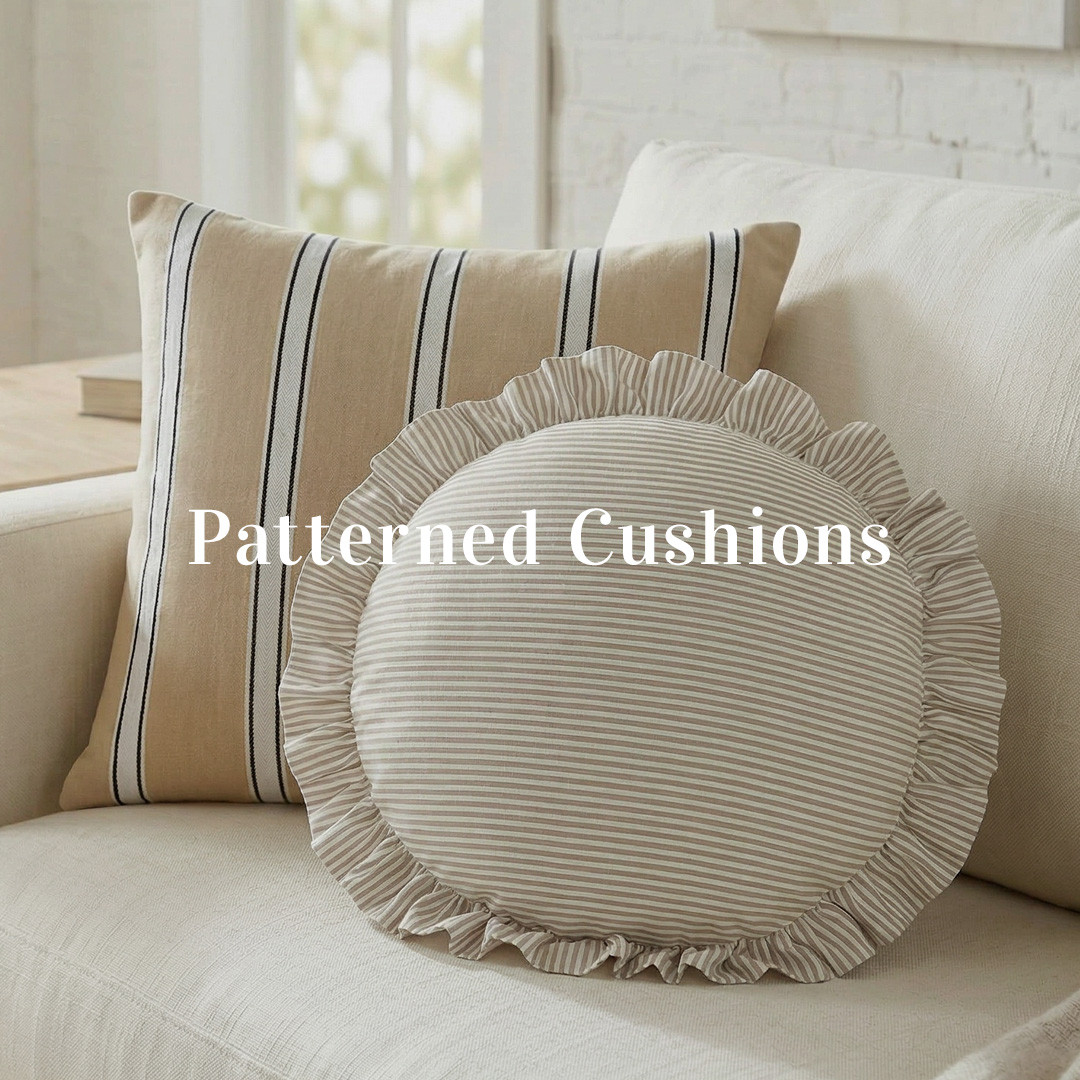
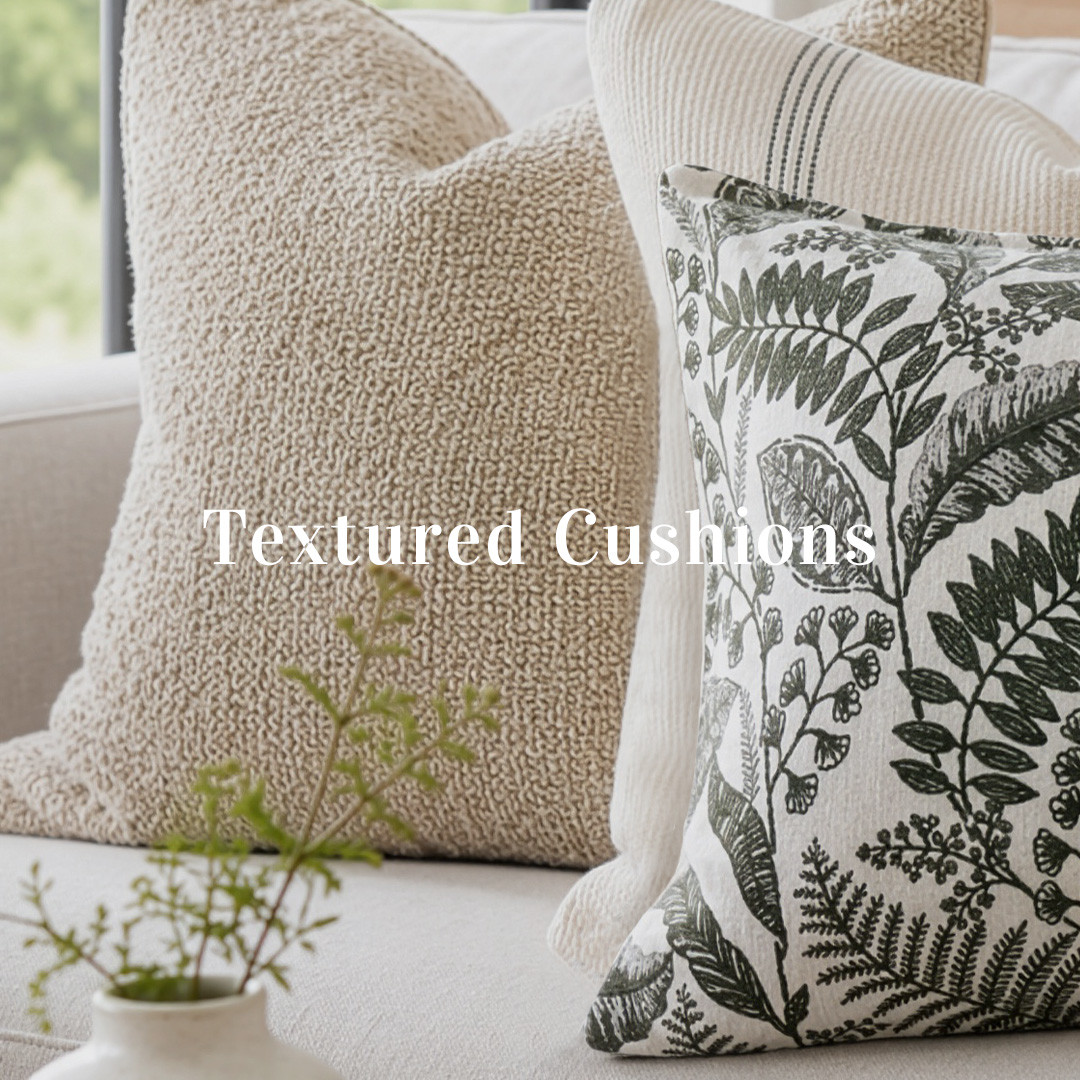
Texture is especially important when working with a restrained colour palette. Linen, cotton, velvet and heavier woven fabrics each bring something different to a room. Even cushions in similar colours can feel beautifully layered when their finishes are varied. Small details can make a difference too. A piped edge, scalloped trim, flange or delicate fringe adds definition and gives a simple cushion a little more presence.
Play With Size and Shape
Using cushions in different proportions creates a more relaxed arrangement than repeating the same size across an entire sofa. Larger square cushions work beautifully towards the back, with slightly smaller cushions layered in front. A rectangular or lumbar cushion introduces another shape and helps break up repetition. On a smaller sofa or occasional chair, fewer cushions with carefully chosen proportions will often look better than trying to fit in too many.
Find the Right Number
There is no perfect formula for how many cushions a sofa needs. A more formal room might suit a balanced arrangement at either end, while a relaxed living space can feel more natural with an uneven grouping. What matters most is that there is still somewhere comfortable to sit. For a three seat sofa, four or five cushions often gives you enough variation without overwhelming the furniture. An armchair may need only one beautiful cushion, while a deep sectional can comfortably carry several.
Create Contrast
Some of the most interesting combinations include one element that feels slightly unexpected. Against a pale sofa, this might be a deeper olive, chocolate or charcoal cushion. In a room filled with plains, it could be a beautiful botanical print. In a more colourful space, a simple natural linen cushion can provide the quiet contrast the arrangement needs.
Contrast does not always mean adding a bold colour. It can come through texture, pattern, shape or fabric bringing the scheme to life.
Connect to the Room
Cushions should feel like part of the room rather than a separate decorating moment. Look beyond the sofa and notice the colours and materials already around it. Timber furniture, woven baskets, ceramics, artwork and foliage can all provide clues for your cushion palette. Repeating these elements subtly creates a sense of continuity. A green cushion might echo foliage across the room, while a warm neutral picks up the colour of timber or a natural rug.
Keep It Relaxed
Beautiful cushion styling should still feel comfortable. You do not need identical pairs at every end of the sofa or a perfectly symmetrical arrangement. A little asymmetry often gives a room more personality and makes the styling feel collected rather than overly arranged.
Try moving one cushion forward or allowing a smaller cushion to overlap a larger one. These small shifts create depth and make the sofa feel inviting.
Change With the Seasons
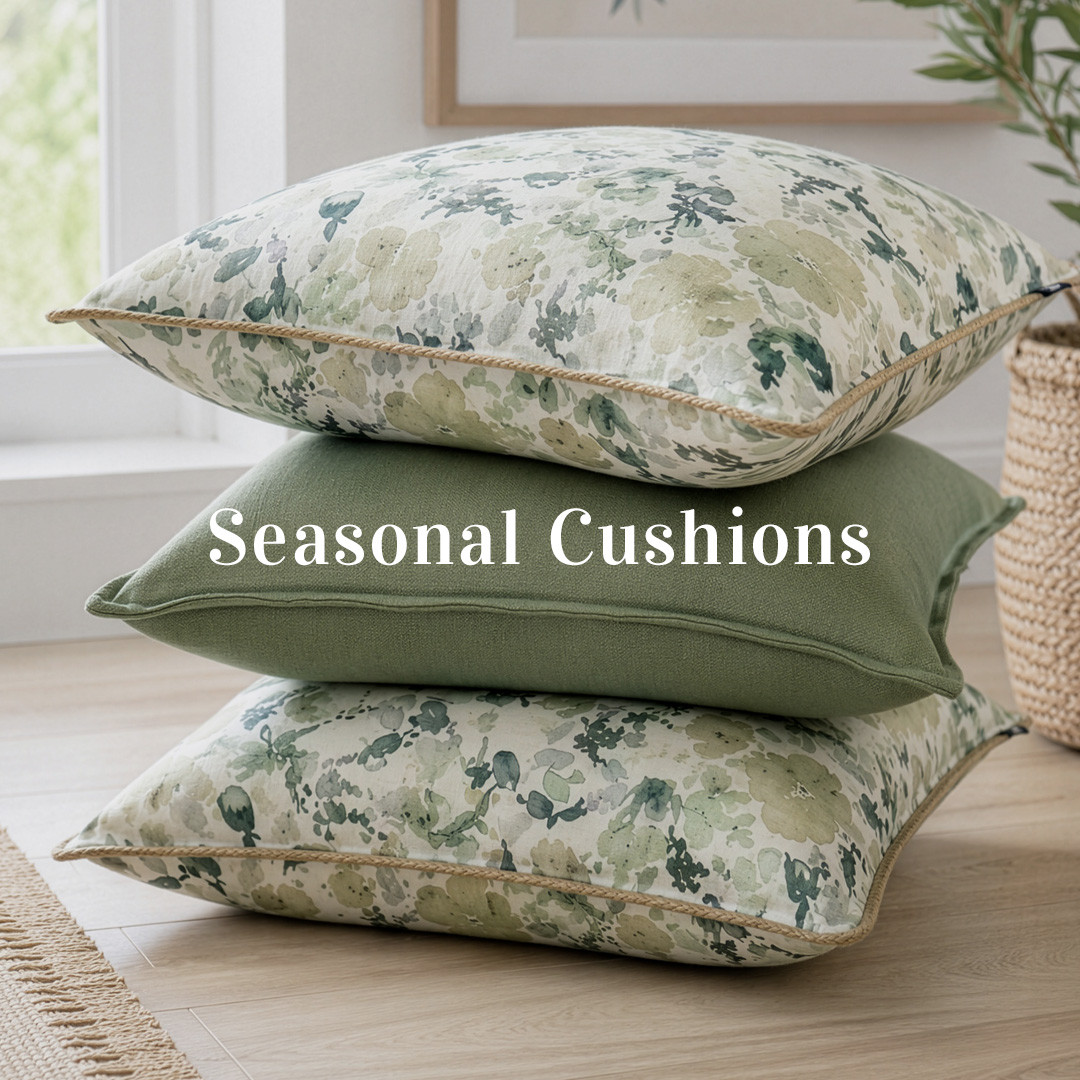
Cushions are an easy way to gently shift a room through the year without changing everything around them. In warmer months, lighter linens, washed cottons, botanical patterns and fresh natural tones can make a room feel airy. As the weather cools, introduce richer colours and heavier textures such as velvet and substantial woven fabrics. You do not need an entirely new collection each season. Changing just one or two cushions can give an existing arrangement a different feeling.
A Collected Finish
The best cushion combinations are not necessarily the ones with the most pattern, colour or detail. They are the ones where every piece brings something slightly different while still belonging to the room around it. Start with a palette, vary your patterns and textures, play with scale and leave enough simplicity for the more decorative pieces to stand out. Above all, style cushions for the way your home is actually lived in. A sofa should still invite you to sit down, settle in and feel completely at home.