How to Choose Wall Art for your Home
How to Choose Wall Art for Your Home
Beautiful wall art brings more than colour to a room. It creates a focal point, adds personality and brings together the details that make a space feel like home.
There's something about the right piece of artwork that can completely change the feeling of a room. It might be a beautiful landscape that draws you in, a vintage botanical that brings a sense of nostalgia or a simple coastal print that makes a space feel instantly more relaxed.
Choosing art is one of the more personal parts of decorating. It's an opportunity to introduce something you love, reflect the character of your home and create a connection between the furniture, colours and textures already in the room.
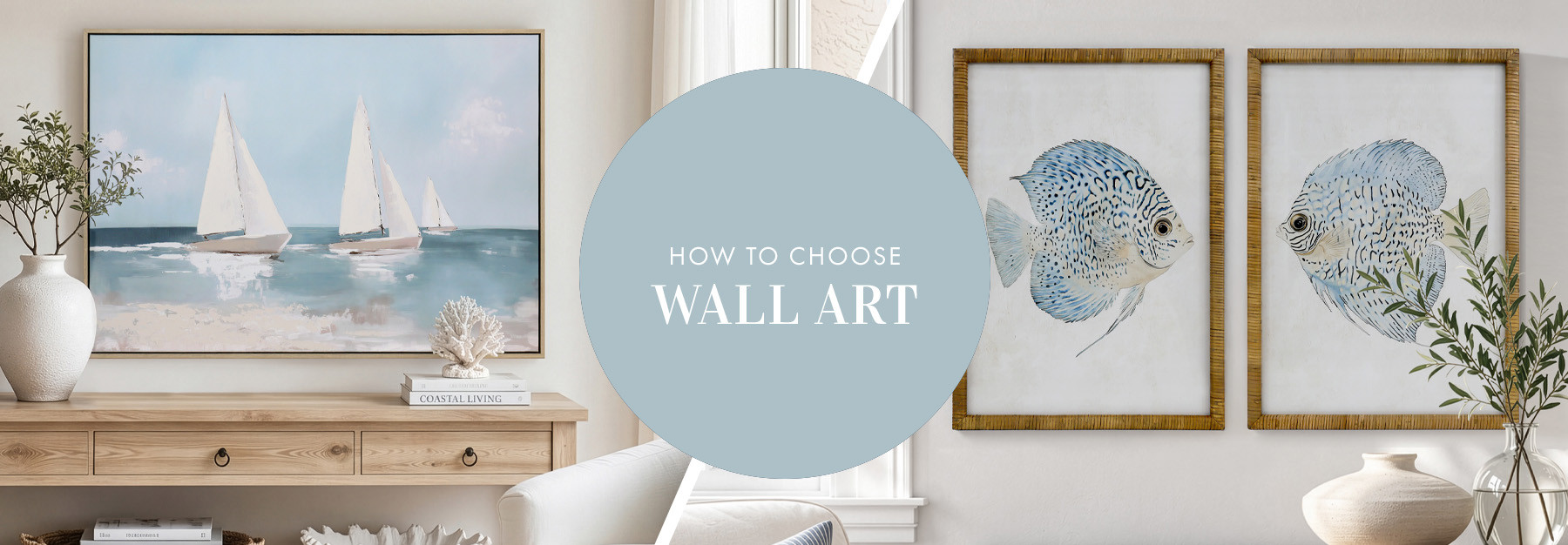
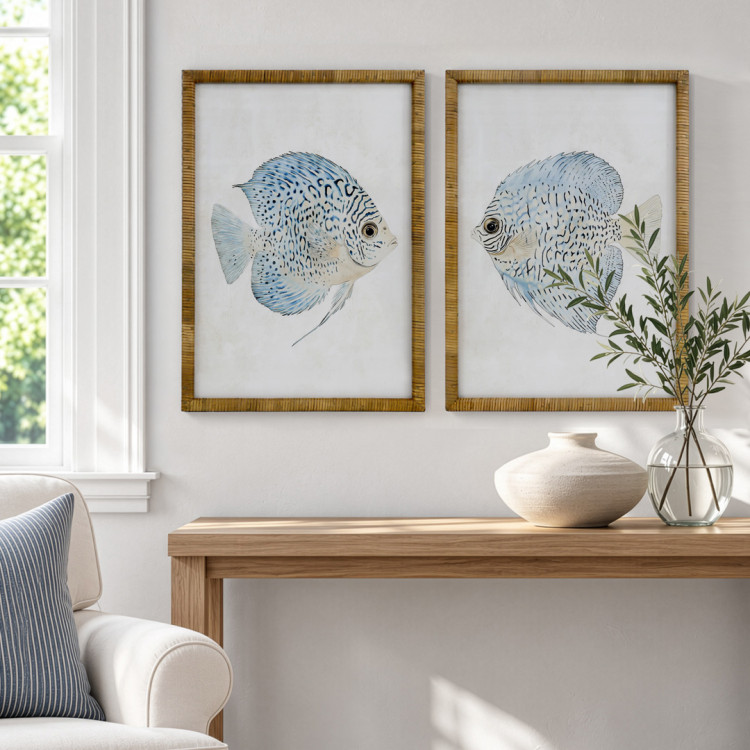
The most beautiful interiors rarely rely on artwork that matches everything perfectly. Instead, the pieces feel thoughtfully chosen, bringing interest, warmth and a sense of individuality to the space. In the room pictured above, the blue fish prints in natural woven frames echo the striped cushion and warm timber, creating a relaxed coastal feel that brings the whole space together.
Begin With What You Love
Before considering size, colour or where a piece might hang, think about what naturally draws you in.
Perhaps you're drawn to the softness of a painted landscape, the detail of a vintage botanical illustration or the familiar beauty of a coastal scene.
Artwork should feel meaningful to you, even if it's simply because you love looking at it.
A beautiful piece doesn't need to be expensive or particularly grand to have an impact. Sometimes a small, thoughtfully framed print can bring just as much character as a larger statement artwork.
Start by exploring wall art for interiors that reflects the feeling you want to create, rather than choosing something simply because it matches the furniture.
Consider the Feeling
Artwork has a wonderful way of setting the mood of a room.
Soft landscapes and muted colours can bring a sense of calm, while botanical illustrations introduce a natural, collected quality. Coastal scenes often create a relaxed atmosphere, particularly when paired with linen, timber and woven textures.
Think about how you want the room to feel. A bedroom might call for something quiet and restful, while a living room can accommodate artwork with a little more presence and personality.
The subject matters, but so does the way it's presented. A softly aged frame can make a print feel more traditional, while a simple timber frame gives the same artwork a fresher, more understated finish.
Find the Right Scale
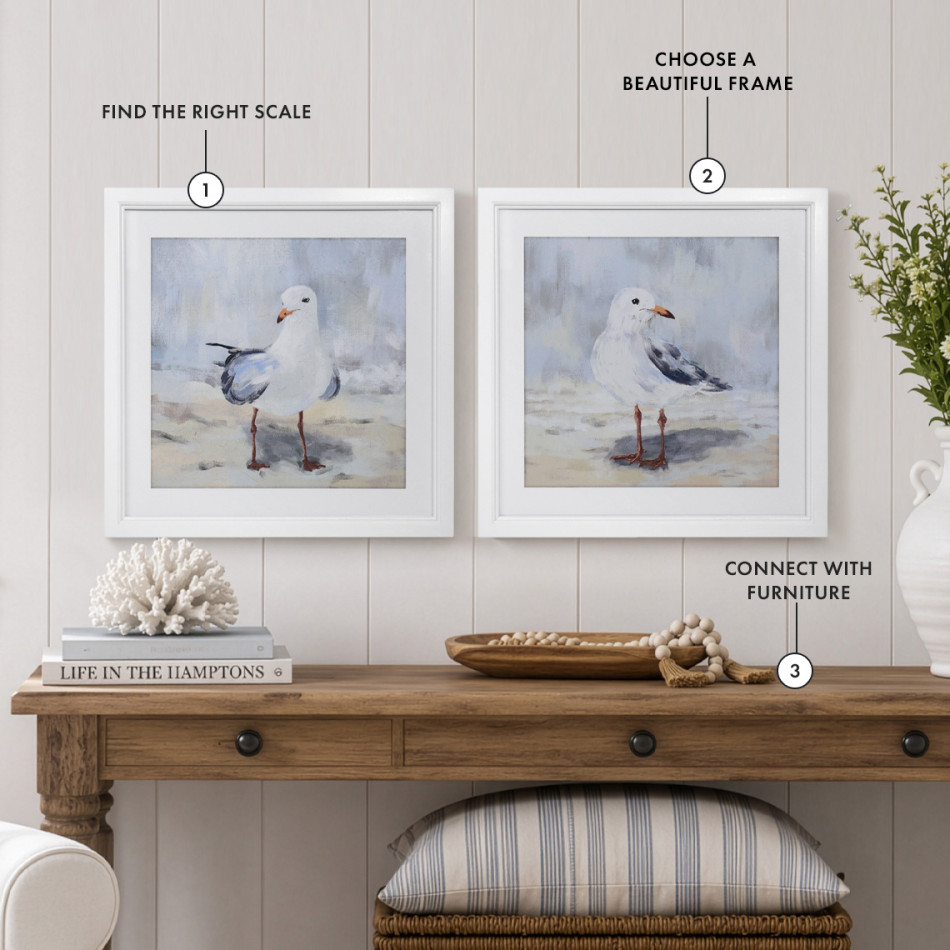
One of the most important considerations when choosing artwork is its relationship to the furniture and wall around it.
A piece that's too small can feel lost above a generous sofa or sideboard, while something overly large may overwhelm a more intimate space.
As a starting point, artwork above a sofa, console or sideboard often looks beautifully proportioned when it measures around two-thirds to three-quarters of the furniture's width.
For example, above a 180 cm sofa, an artwork or grouped arrangement approximately 120 to 135 cm wide can create a pleasing balance.
Don't be afraid to choose something substantial. A larger piece often gives a room a stronger focal point and can feel more considered than several smaller pieces scattered across the wall.
Work With Your Colour Palette
Artwork can be a beautiful way to introduce colour, but it doesn't need to match every shade already in the room.
Look for a subtle connection instead. Perhaps the soft blue in a landscape relates to a cushion, or the earthy tones of a botanical print pick up the warmth of a timber sideboard.
Even a small amount of repeated colour can help the artwork feel connected to its surroundings.
For a more layered look, choose a piece that introduces a slightly unexpected shade while still complementing the overall palette.
The aim is to create a conversation between the artwork and the room, rather than making everything match.
Choose a Beautiful Frame
The frame can be just as important as the artwork itself.
Natural timber brings warmth and works beautifully with landscapes, botanicals and relaxed coastal interiors. Darker timber or antique-inspired finishes can give a piece a more traditional, collected appearance, while a fine black frame offers a little definition.
Consider the width and detail of the frame too. A generous timber frame can give a simple print more presence, while a delicate profile allows a detailed illustration to remain the focus.
A mount can also make a difference, introducing a little breathing room around the artwork and giving smaller pieces a more refined finish.
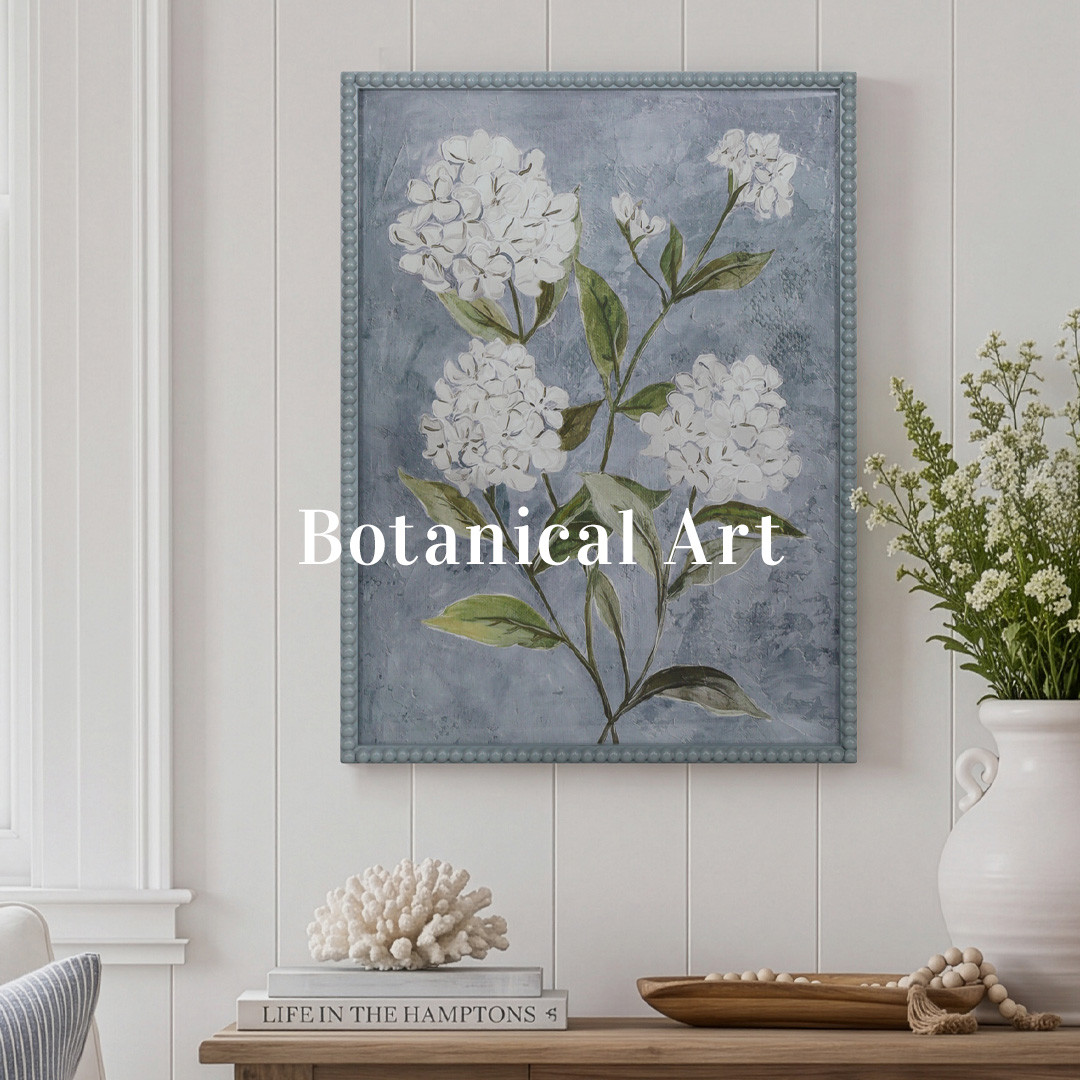
When choosing framed botanical wall art, for example, the frame can help bring out either the vintage character or the fresher, more contemporary side of the illustration.
Mix Different Art Styles
A home feels more interesting when every piece of artwork doesn't look as though it came from the same collection.
Try combining a traditional landscape with a smaller botanical illustration, or a vintage-inspired print with something more contemporary.
The key is finding a connection between the pieces, perhaps through their colours, subject matter or framing.
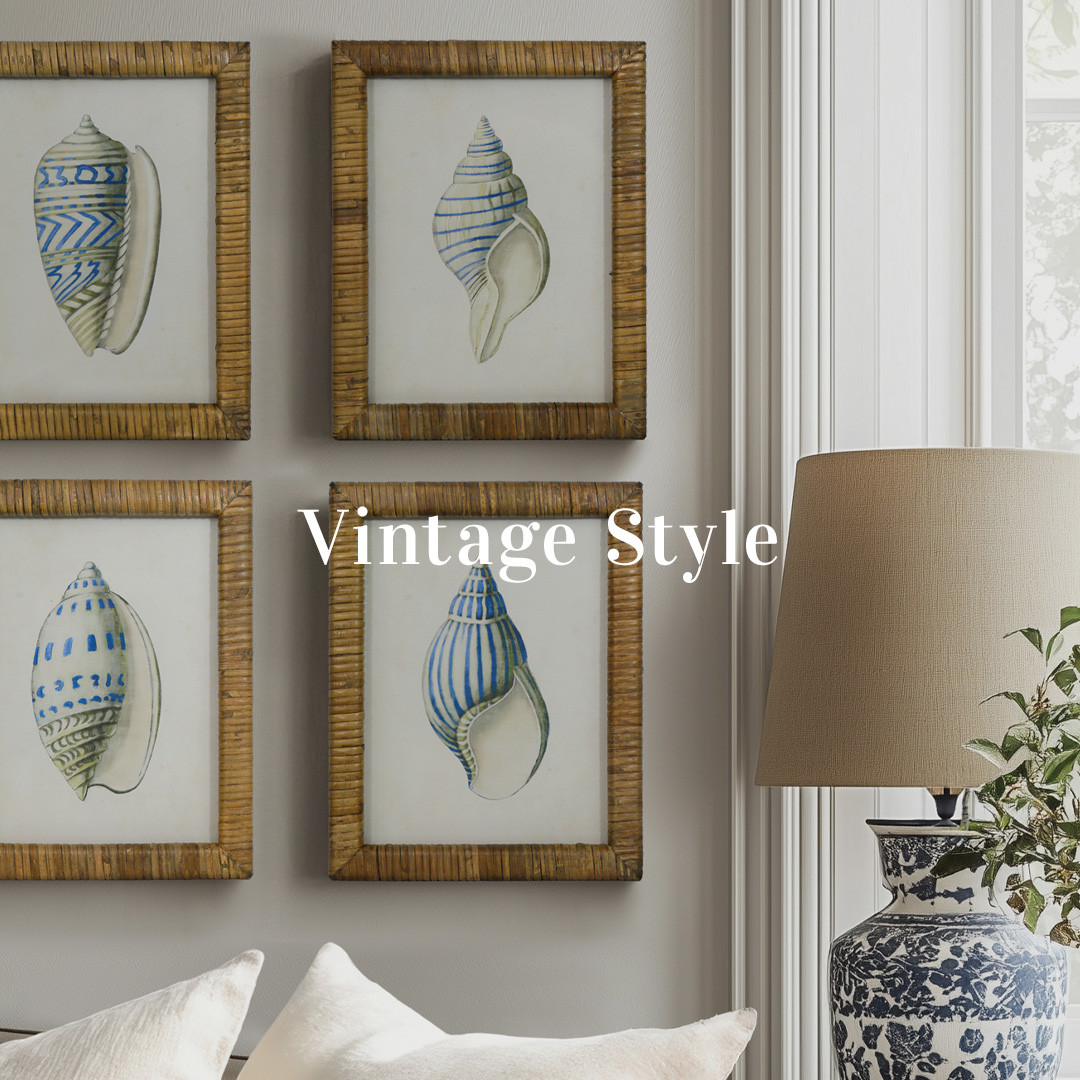
A collection of vintage inspired art prints can sit beautifully alongside simpler designs, particularly when the surrounding furniture and accessories bring a similar balance of old and new.
Mixing styles gives a room that lovely sense of having evolved over time, rather than being decorated all at once.
Create a Collected Gallery
A gallery wall is a wonderful way to bring together artwork of different sizes, subjects and styles.
Begin with one or two larger pieces, then arrange smaller artworks around them. Try varying the orientation, mixing portrait and landscape formats to create a more natural composition.
You might combine a favourite photograph, a botanical study, a small landscape and a piece with a little more character.
Frames don't need to be identical, but repeating a finish or colour can help the collection feel connected.
Before hanging, lay the pieces on the floor to experiment with the arrangement. Keep the spacing reasonably consistent, allowing each artwork enough room to be appreciated.
A gallery wall should feel collected and personal, with just enough order to bring the different pieces together.
Think Beyond the Living Room
Some of the loveliest places for artwork are the spaces we don't always think to decorate.
A small botanical print in the kitchen can bring a little country charm, while a framed landscape above a bedside table adds softness without overwhelming the room.
Hallways, entryways and even quiet corners offer opportunities to introduce something beautiful.
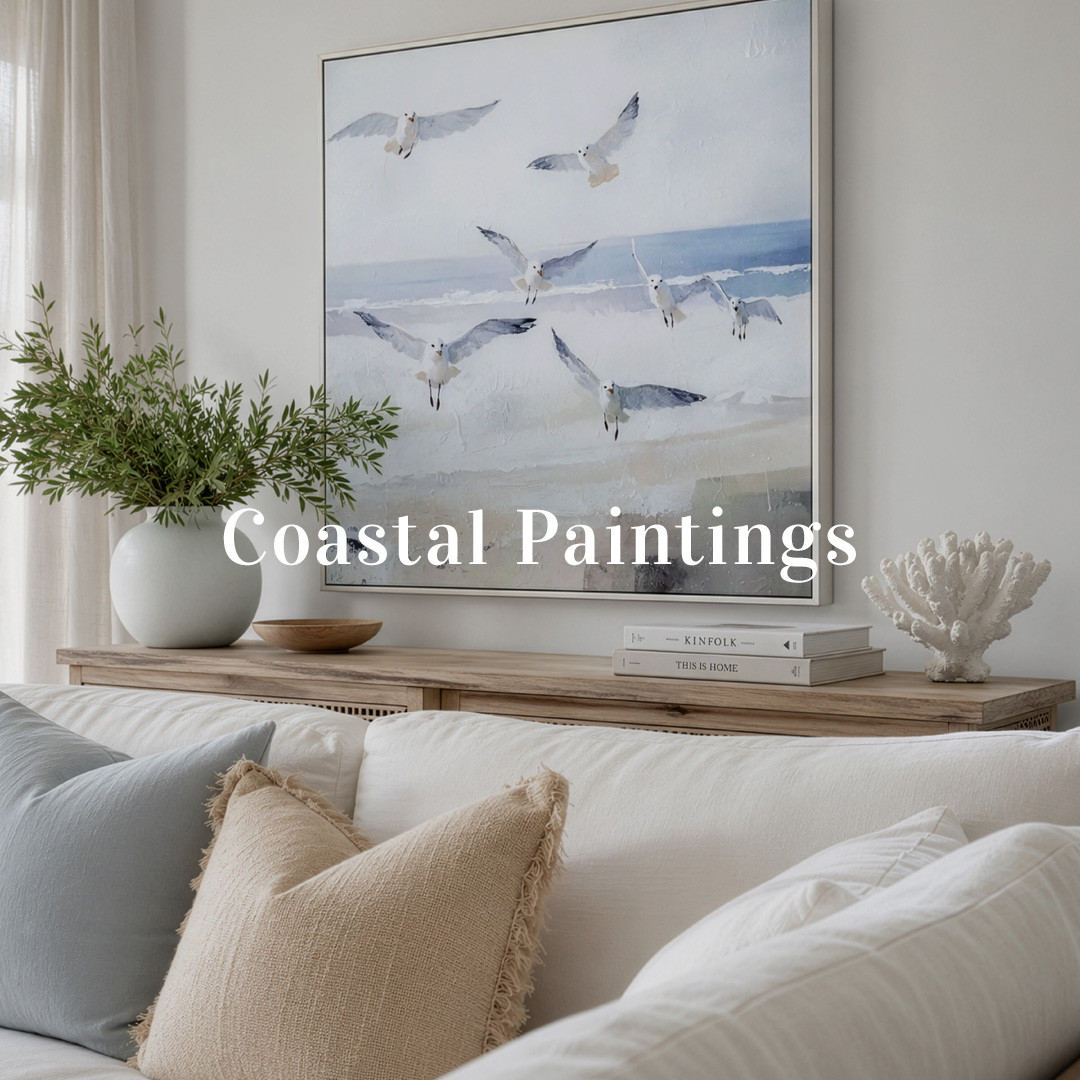
Try a pair of classic coastal art prints in a relaxed bedroom, or a smaller vintage-inspired piece above a console in the entrance.
Artwork doesn't always need a prominent wall. Sometimes an unexpected placement is what makes it feel particularly special.
Hang Art With Intention
Where artwork sits on the wall can make an enormous difference to how a room feels.
As a general guide, aim to position the centre of a standalone artwork around eye level, approximately 145 to 155 cm from the floor. Adjust this to suit the proportions of the room and how the artwork will be viewed.
When hanging art above furniture, the relationship between the two is more important than following a fixed height. Leaving approximately 15 to 25 cm between the furniture and the bottom of the frame is often a useful starting point.
The artwork should feel visually connected to what's beneath it, rather than floating too high on the wall.
For a pair or collection of prints, consider the entire arrangement as one composition, keeping the spacing thoughtful and the overall proportions balanced.
Try Something Unexpected
Not every piece of artwork needs to be hung traditionally.
A framed print leaning on a mantelpiece or sideboard can feel wonderfully relaxed, particularly when layered with a lamp, vase or collected object.
Smaller artworks can also be placed on shelves, tucked among ceramics and books, or layered slightly in front of a larger frame.
These informal arrangements bring a softer, more lived-in quality to a room and make it easy to change things as your collection grows.
It's a lovely way to enjoy artwork without feeling that every piece needs a permanent place.
Let Your Home Tell a Story
The most beautiful artwork collections are often built slowly.
A landscape that reminds you of somewhere special, a botanical illustration chosen simply because you love it, or a print discovered while travelling can all become part of the character of a home.
Don't feel that every wall needs to be filled or every piece needs to follow the same style. Allow room for new discoveries and give the artwork you love the space it deserves.
When chosen thoughtfully, wall art becomes more than a finishing detail. It brings warmth, personality and a sense of history, making a home feel truly your own.